2026-08-21 · Tom Reynolds
Replacing Dated Two-Prong Outlets in Older Colleyville Neighborhoods
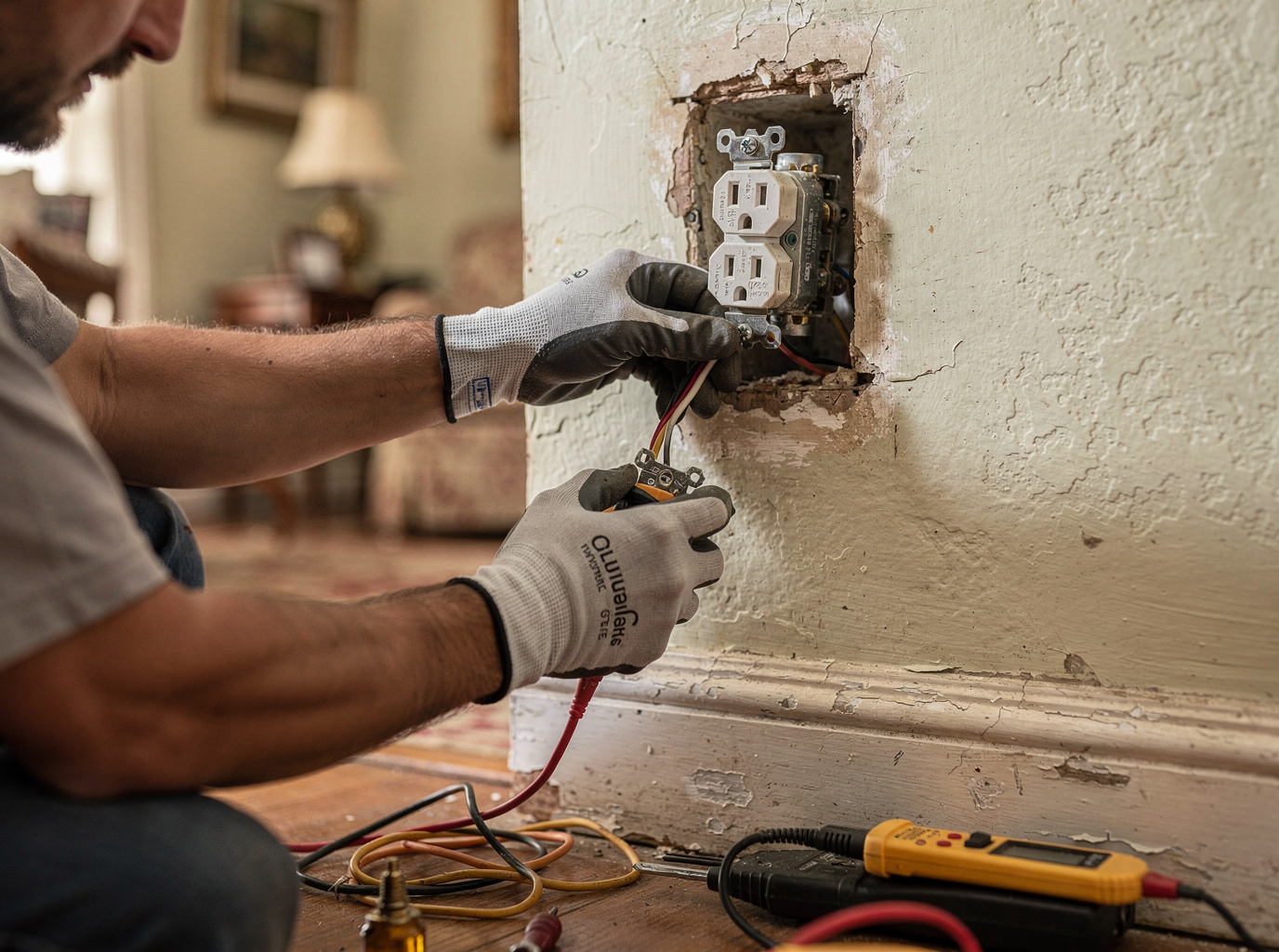
Replacing two-prong outlets in older Colleyville neighborhoods starts with confirming the home has accessible grounded wiring behind the walls, which often requires 2-4 hours per room when the original cable runs through plaster or narrow stud bays common in pre-1970 builds.
Why Two-Prong Outlets Persist in Colleyville Neighborhoods
Homes in Whitley Heights, Woodland Hills, and Heritage were frequently constructed between the 1950s and 1970s with two-wire systems that met code at the time but lack the equipment grounding conductor required today. Tarrant County soil conditions and mild winters mean these homes rarely experience the freeze-thaw cycles that damage wiring elsewhere, so the original cable often remains intact yet ungrounded. Hot humid summers drive heavy air-conditioner use that can overheat undersized neutral wires when multiple appliances share a circuit. Residents near Colleyville Nature Center or Bransford Park notice outlets warm to the touch during peak cooling months because two-prong receptacles provide no path for fault current. Upgrading only the visible outlets without addressing the full run leaves hidden splices vulnerable to the moisture that infiltrates attics during high-humidity periods.
Assessing Existing Wiring Before Replacement
Start by turning off power at the panel and removing the outlet cover to inspect the cable type. Look for cloth-insulated or rubber-coated two-wire cable without a bare ground; if only two conductors enter the box, a new three-prong outlet cannot be installed safely without running new cable. Test adjacent outlets on the same circuit with a plug-in tester to map which rooms share the run, a common layout in Colleyville Town Center bungalows where additions were wired from the nearest existing box. Measure box depth—many original single-gang boxes are only 1.5 inches deep and will not accept a modern tamper-resistant receptacle plus pigtails without crowding. Note any aluminum wiring present in 1960s-1970s homes near Southlake and Keller borders, which requires CO/ALR-rated devices or pigtailing with copper. Document the panel location and available breaker spaces, since adding a dedicated circuit for high-draw devices often follows outlet upgrades.
Installation Steps for Grounded Receptacles
After confirming a ground path exists or planning new cable, shut off the breaker and verify zero voltage with a non-contact tester. Remove the old outlet, label the hot and neutral conductors, then install a new three-prong receptacle using the screw terminals rather than backstabs for a more secure connection that withstands repeated plug insertions during humid summers. If the box lacks a ground wire, run 12/2 NM cable from the outlet to the panel or nearest grounded junction box, securing it with staples every 4.5 feet and within 12 inches of boxes. In plaster walls common to Heritage homes, cut a minimal channel with a rotary tool to avoid cracking surrounding material, then patch with setting-type compound. Torque terminal screws to 12-15 inch-pounds and secure the device to the box with the longer screws supplied. Restore power and test each outlet with a three-light tester plus a GFCI tester on bathroom and kitchen circuits. For homes where multiple rooms require this work, whole house rewiring often becomes the more efficient long-term solution than piecemeal outlet swaps.
When Panel or Circuit Limitations Require Additional Work
Many Colleyville homes built before widespread central air still operate on 60- or 100-amp panels that cannot support added grounded circuits without overload during summer peaks. If the existing panel uses fuses or has no spare slots, a subpanel or full upgrade may precede outlet replacement. Homes in Woodland Hills frequently share this constraint because original builders allocated minimal capacity for future loads. Check the main breaker rating and count existing 15- and 20-amp circuits serving bedrooms and living areas. When two-prong outlets are scattered across several rooms, running new cable back to a electrical panel upgrade prevents nuisance trips that occur when window units and computers share an ungrounded line. Review the related discussion on how Colleyville homes handle summer AC loads without tripping breakers for load calculations that apply directly to outlet circuit planning.